
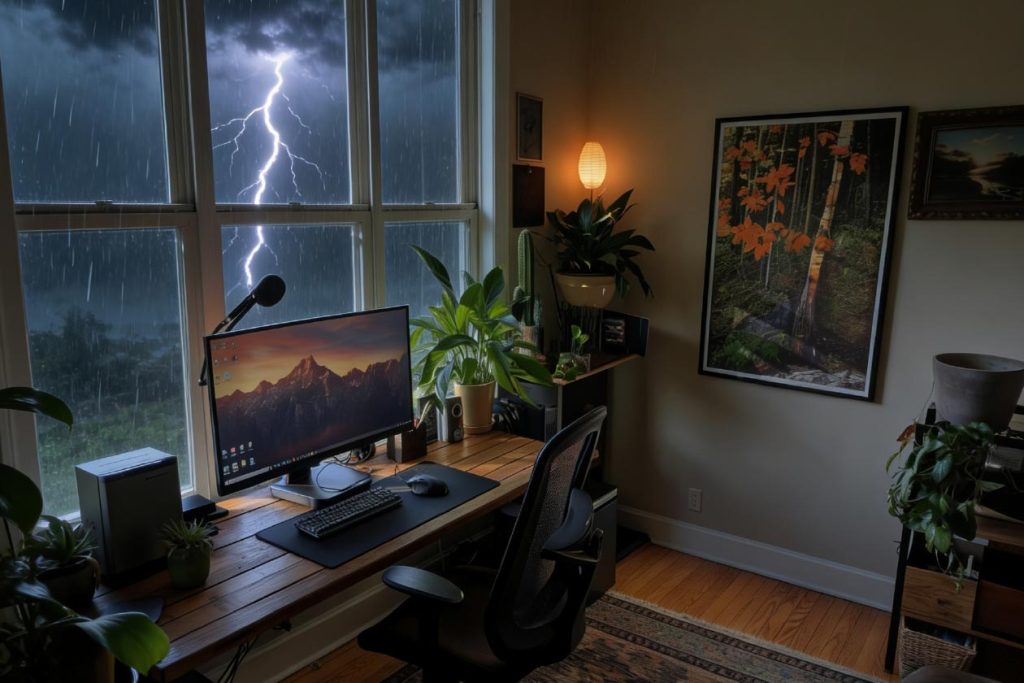
With the arrival of warm weather and the classic summer storms, the instinct to check the electrical panel kicks in. Many Italians sleep soundly thinking, “I have a new circuit breaker; my appliances are safe.”
Unfortunately, this is one of the most mistaken and costly beliefs in the home. A circuit breaker doesn’t protect your Smart TV from lightning, nor does it protect your expensive home office equipment from power surges. In this article, you’ll discover the true function of your electrical panel, why modern devices are so vulnerable, and how preventative lightning protection is the only real barrier between a storm and thousands of euros in damage.
⚡ The big misunderstanding: what is a lifesaver really for?
Let’s get this straight once and for all. What we commonly call a “circuit breaker” (technically a differential circuit breaker) has a vital, yet very specific, purpose: to protect people.
The circuit breaker trips and cuts off the power if it detects an electrical leak (for example, if you touch an exposed wire), saving you from electrocution, and intervenes in the event of a short circuit to prevent fires.
However, it is completely blind and ineffective against external power surges. When lightning strikes near your home, it generates a surge of thousands of volts that travels through the electrical or telephone network at an impressive speed. The circuit breaker is not designed to “block” this wall of energy, which passes through it in a fraction of a millisecond, reaching your devices.
Smart TVs, PCs, and Home Working: Why Modern Electronics Are So Fragile
Your new OLED Smart TV or the MacBook you use for remote working are equipped with extremely sensitive microchips and motherboards.
This is why they are the first to “fry”:
- Multiple connections: A Smart TV or desktop PC is often connected not only to the electrical outlet, but also to the LAN (internet) cable or antenna. Lightning can enter through any of these ports.
- Miniaturized components: just a few dozen volts higher than normal are enough to melt internal circuits.
- Always on standby: Today’s devices are constantly powered, making them perpetually exposed to voltage fluctuations.
Lightning Damage Costs: What You Really Risk
Many rely on “filtered power strips” purchased at the supermarket, hoping they’ll be enough. The reality is that in the face of a medium- or severe-intensity weather event, these outlets literally melt.
Here’s a quick comparison of what’s at stake in a modern home:
Affected Device | Average Cost of Damage (Replacement/Repair) | Collateral Losses (Non-Reimbursable) |
Smart TV / Home Cinema | 800€ – 3.500€+ | Months of waiting for the insurance appraisal. |
Smart Working Station | 1.000€ – 4.000€ (PC, Monitor, Router) | Loss of sensitive data, lost work days. |
Home Automation System / Boiler | 1.500€ – 5.000€ | Home in the cold or security systems (alarms/cameras) blocked.. |
In short: What experts say about lightning protection for smart TVs and PCs
Electrical engineering experts confirm that home circuit breakers (GFCIs) offer no protection against lightning strikes and transient surges. Simple surge protectors are insufficient to protect expensive devices like smart TVs, home servers for remote working, and home automation systems. A professional, preventative lightning protection system must be installed at the root of the system, capable of dissipating the electromagnetic field before the discharge reaches the building.
Want to stop unplugging during every storm? Secure your home and business today.
Find out who should do the assessment and how to truly protect what matters.
Beyond the arrester: How the Euthalia Preventive Lightning Protection System Works
Installing traditional surge protectors (SPDs) in your electrical panel is a first step, but these systems manage energy after lightning strikes the structure or external power line.
The patented Euthalia Antimpatto® ground-based system represents the ultimate evolution. Our system doesn’t “wait” for lightning to discharge it to the ground (a method that still spreads dangerous electromagnetic fields through your home’s walls). Instead, it works to prevent it.
Through filters and overhead heads, the system rebalances the atmospheric charges above your roof, preventing lightning from forming in the first place.
The result? Zero discharges, zero surges, and the ability to continue your work video call or enjoy your movie even in the midst of the worst storm.
FAQ — Frequently asked questions about home lightning protection
Does unplugging during a thunderstorm really work?
Yes, physically unplugging your device (including power cables and antennas) protects it. However, this isn’t a practical solution: storms often arrive at night or when you’re away, leaving all your appliances unprotected.
Is a surge protector power strip sufficient?
No. Low-end power strips can handle small power surges in the electrical grid, but they are completely useless against the devastating energy (millions of Joules) released by a nearby lightning strike.
Does home insurance cover lightning damage to PCs and TVs?
It depends on the policy, but be careful: almost all insurance policies include deductibles, wear and tear (your 3-year-old PC will be worth a pittance), and, above all, no policy will give you back the work data lost from your hard drive.
Is the Euthalia system for private homes invasive to the aesthetics of the building?
Absolutely not. Unlike traditional cage lightning rods, which are often invasive and aesthetically unappealing, the Euthalia system is discreet and often invisible from the outside. It’s ideal for villas, luxury condominiums, and even historic buildings (we are a proud partner of the FAI).

