
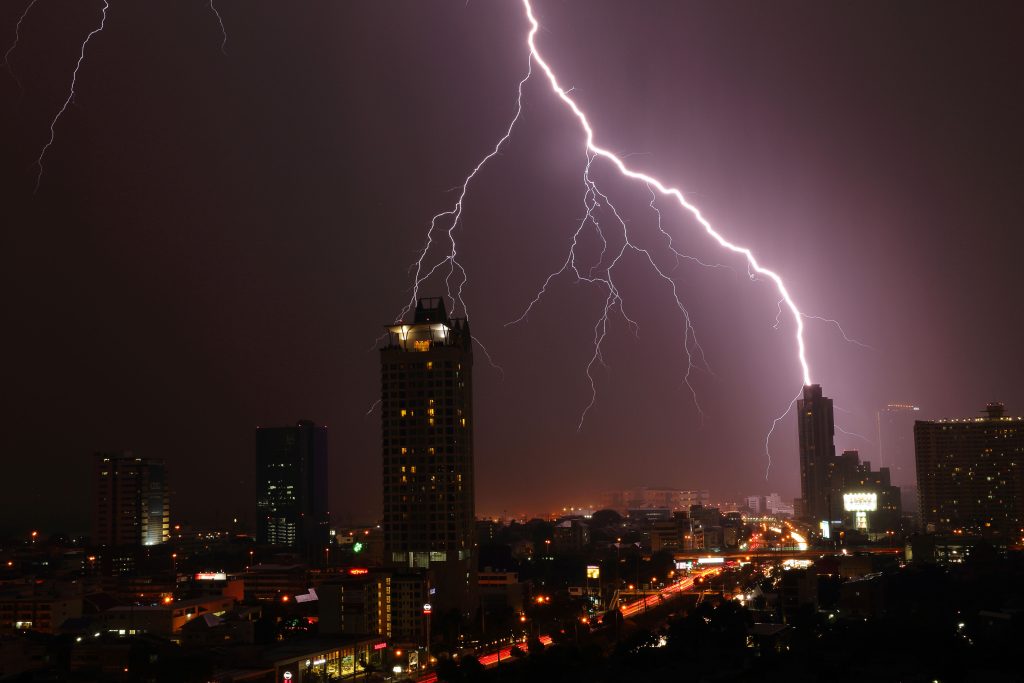
When it comes to lightning protection, it is essential to understand how exposed a building, plant or infrastructure is to the risk of lightning strikes. Calculating the risk is not just a technical matter: it is the first step in deciding whether and how to intervene with appropriate protection systems.
⚠️ Why is it important to calculate lightning risk?
Lightning is an extremely violent atmospheric phenomenon: it can generate voltages of up to 100 million volts, with devastating effects on buildings, electrical systems, people and animals. An accurate risk analysis allows you to:
- Prevent structural and electrical damage
- Reduce the risk of fires or blackouts
- Protect people and property
- Verify the regulatory obligation to install protection systems
Parameters to consider
According to technical standard CEI EN 62305, the risk of lightning strikes is calculated by taking various factors into account:
- Lightning density (Ng)
This is the number of lightning strikes per year per km² in the area where the building is located. In Italy, it varies from 0.5 to 4 Ng/km².
- Type of structure
For example: residential building, industrial plant, hospital, historic building, church, critical infrastructure. Each type has a different acceptable level of risk.
- Size and height of the structure
The greater the height, the greater the probability of being struck.
- Materials and type of construction
Wooden structures or structures with metal roofs are more susceptible to lightning damage.
- Presence of electrical, IT or photovoltaic systems
These increase the risk of electrical damage and require specific protection.
- Crowding and presence of people
Schools, places of worship or public areas require higher levels of safety.
What does the calculation give?
The result of the analysis is a risk value R, which is compared with a limit value Rₐ (acceptable) defined by the regulations.
If R ≤ Rₐ: protection is not mandatory, but may still be recommended.
If R > Rₐ: a lightning protection system (LPS) must be installed.
The Euthalia solution: calculation + patented technology
Euthalia does not limit itself to simply calculating the risk: it analyses each specific case and proposes Antimpatto® technology, which is capable of neutralising lightning before it forms.
Our systems do not divert lightning, but prevent it from being generated: no impact, no damage. Furthermore, when combined with the Euthalia earth filter, thanks to its protection against indirect lightning strikes, it guarantees maximum efficiency of electrical systems.
🔍 Want to know if your property is at risk?
Contact us for a lightning risk analysis. Whether it’s a home, business, church or manufacturing facility, we can help you protect what really matters.

